
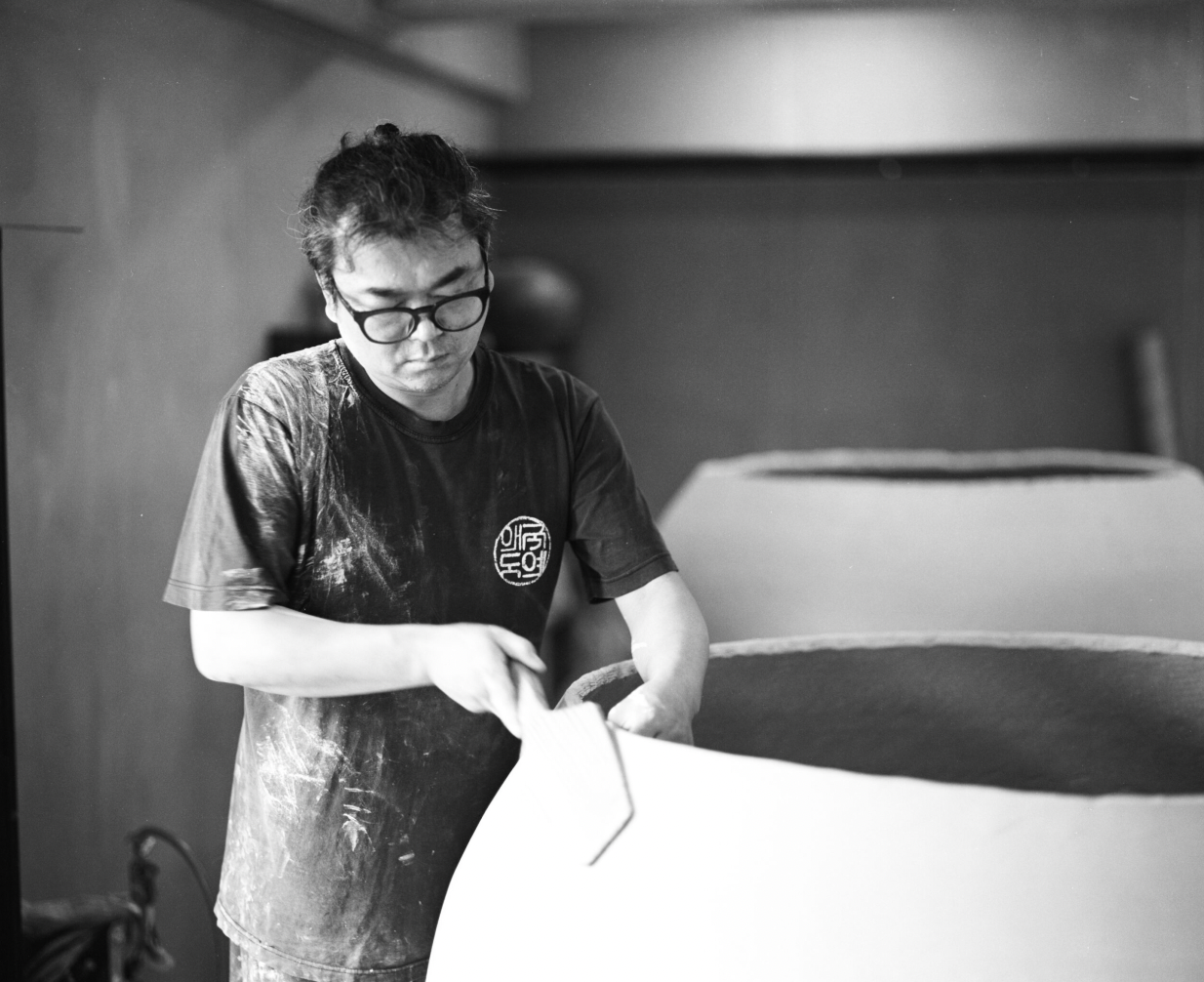
Kwak KyungtaeOnggi Masterclass
2nd - 6th September 2026 | 5 Day Workshop | £2,300
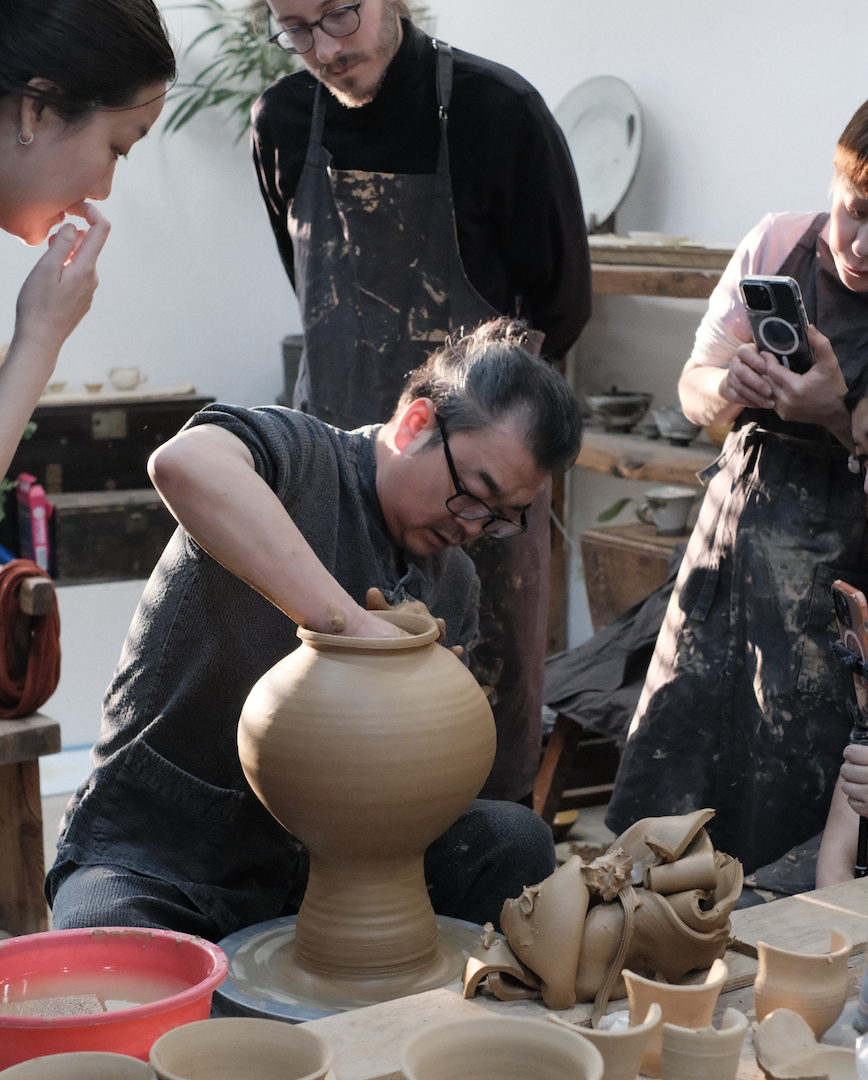
This five-day masterclass offers a taste of traditional Korean Onggi-making techniques for making large jars. Neither a wheel throwing method nor a pure hand building method, Onggi involves a unique set of techniques that allow the maker to create a jar of any scale.
What is Onggi?
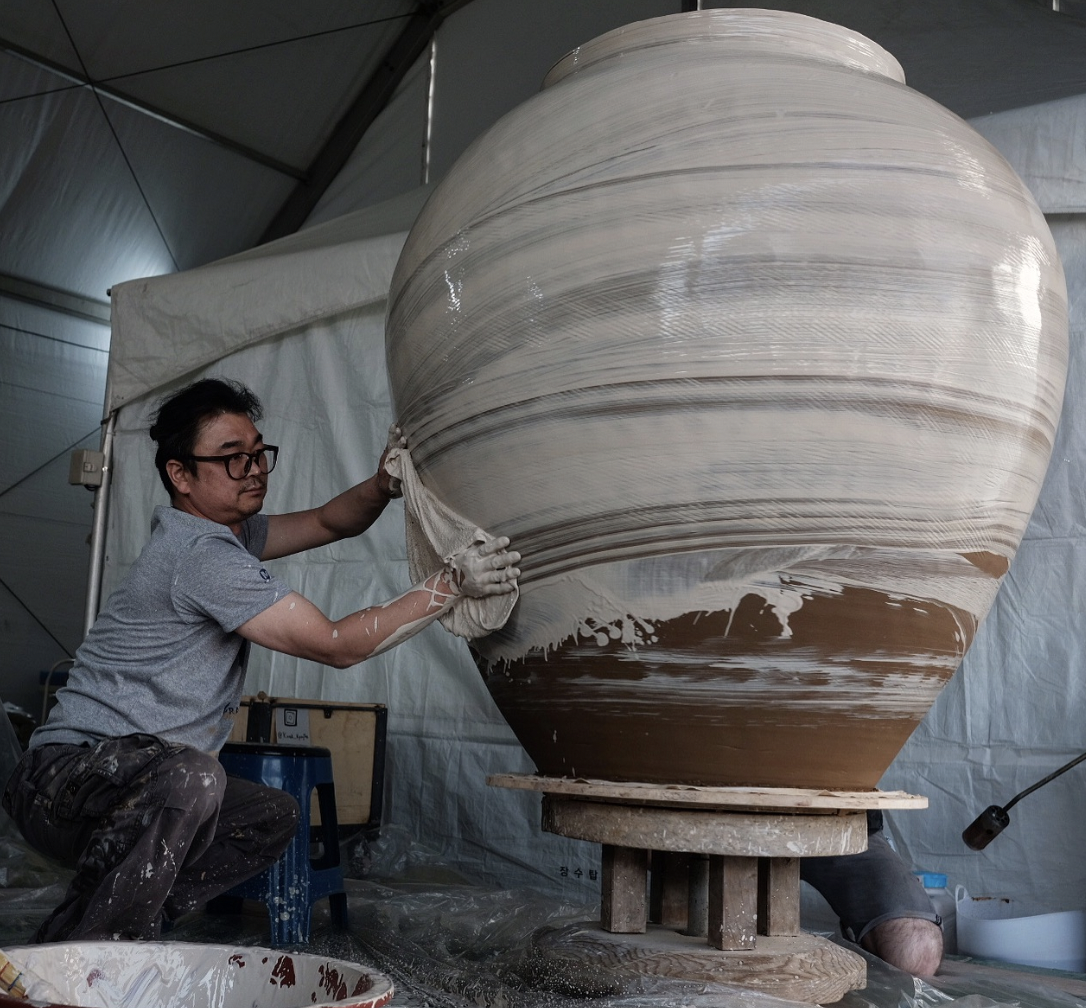
Onggi has been popularised as Korea’s ‘large fermentation vessels’, but its meaning is not limited to large vessels. We explore how ‘Onggi’ encompasses a way of working with certain types of clay and with certain firing conditions. In this intensive session we uncover the deep roots of onggi in Korean society and its role as a vessel for humanity, both literally and figuratively. We begin by exploring how specific cultural, geographical, and culinary contexts informed the development of this incredible set of techniques, then dive right into making. As Teacher Kwak Kyungtae forms an Onggi from start to finish, his apprentice will be translating his detailed commentary on each part of the process. One of the beautiful aspects of Onggi is that each movement has been developed and refined by generations of potters; you will witness the same movements that were being used thousands of years ago.
WHAT YOU NEED TO KNOWThe Course in Detail
In this intensive multi-day masterclass master Kwak Kyungtae aims to share and teach the traditional Korean Onggi making techniques in a concise format. Onggi is a method for making large pieces quickly and efficiently, born out of the folklife necessities of Korea – used for all sorts of functional purposes like culinary fermentation, food storage, and general containers for daily life.
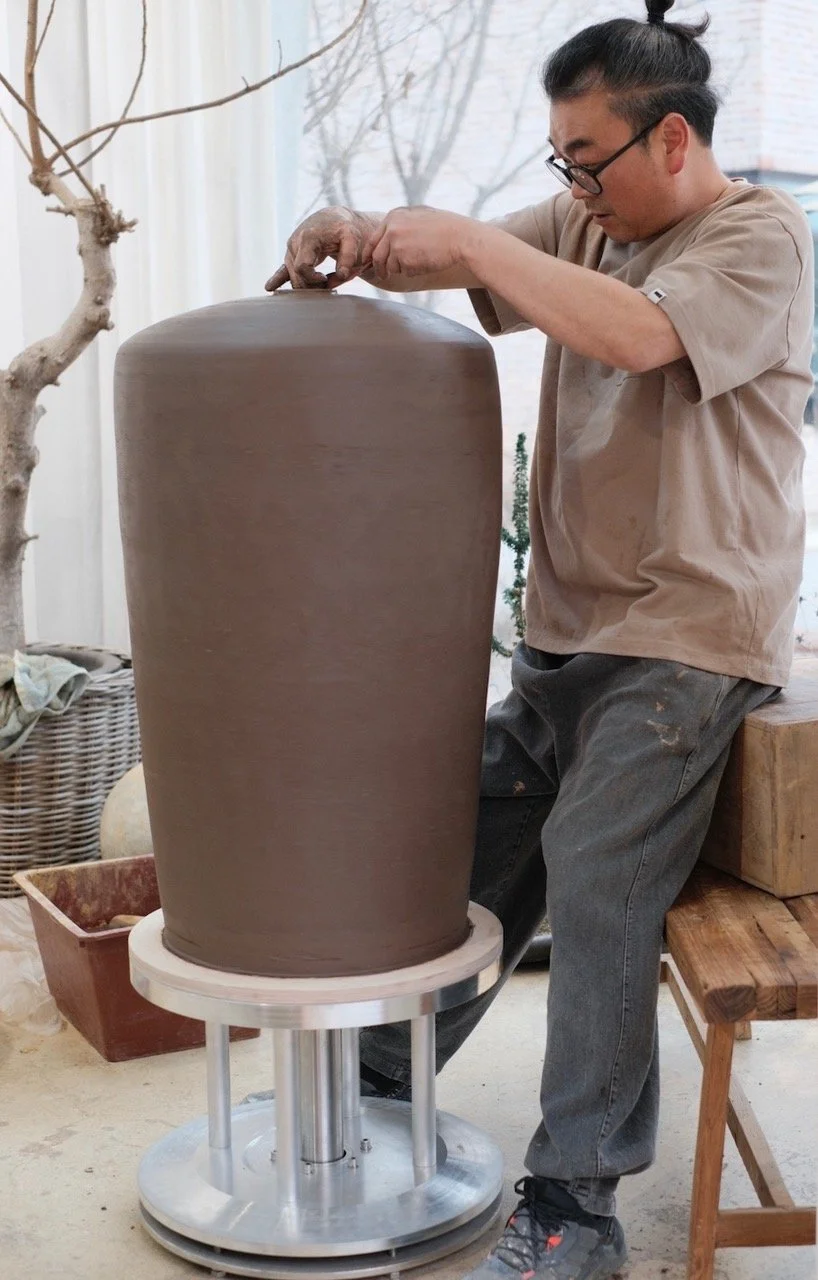
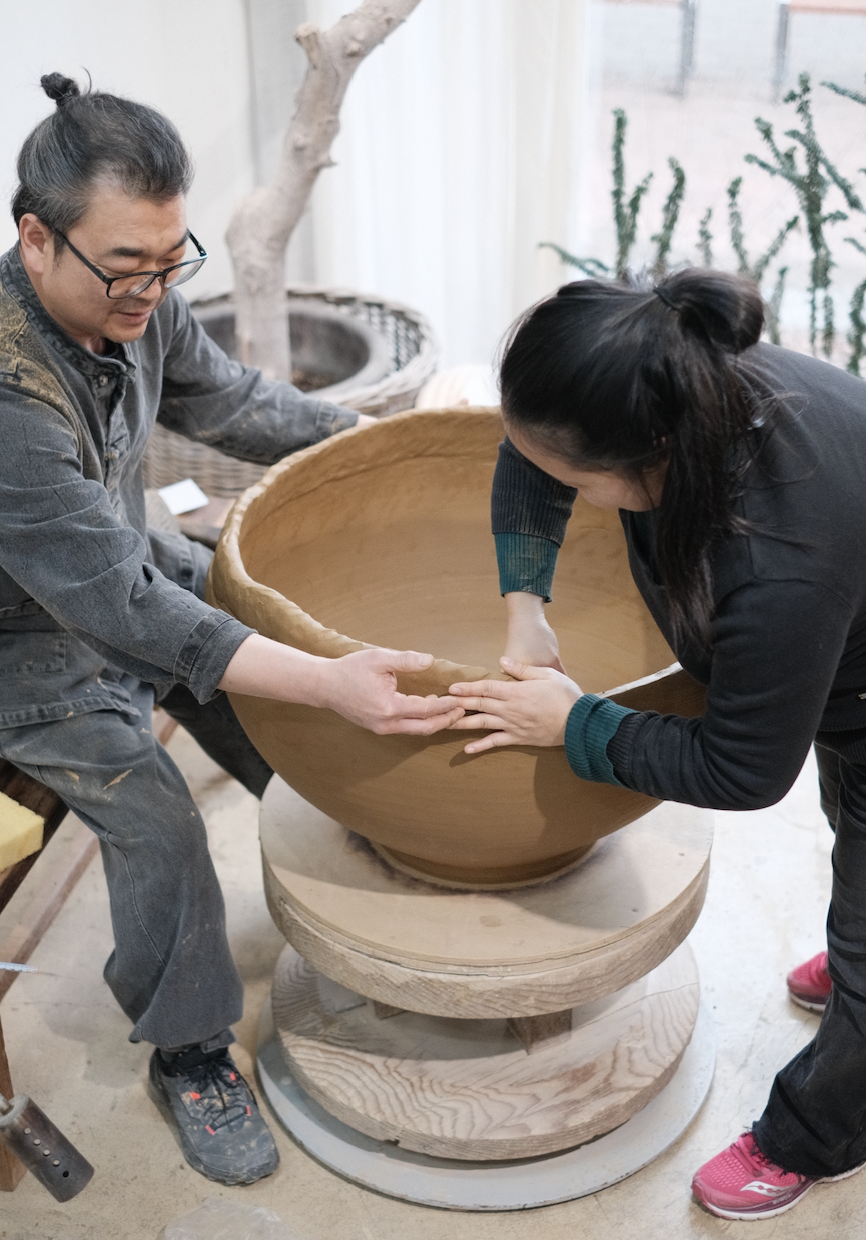
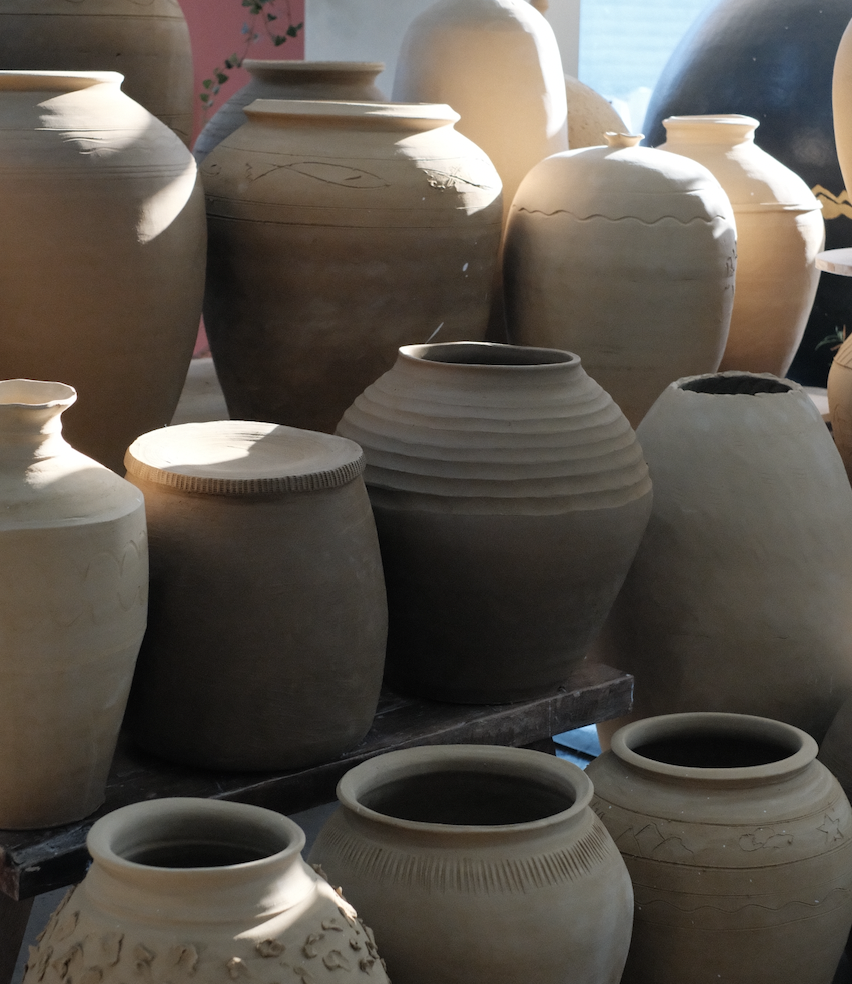
Many ancient traditions share similar approaches to making large jars from clay, but the Korean Onggi techniques are perhaps the fastest and most elegant collection of skills for making large jars that are still practiced today. Neither a wheel throwing method nor a pure hand building method, Onggi requires a unique set of techniques that, although difficult to learn, allow the maker to create a jar of any scale with the highest efficiency of movement.
Students will learn and study each step in this beautiful process from stretching the clay into coils (taryeom), making the base (ba-dak), coiling up the wall (taryeom-jil), to the paddling (surae-jil), shaping, rim making, etc. We will also discuss traditional glaze and firing methods for this type of ware.
This course welcomes those who desire to make larger work but may be intimidated by throwing large on the wheel. For those who have tried, or currently use, hand building in their work, but desire a fresh set of skills, a faster workflow or want to diversify their skillset, this course is for you.
No matter how many days or decades of experience you have, you will find Onggi to be a new and fulfilling learning experience that connects you further with clay as a medium. The direct contact with the clay and forming methods will awaken in you an ancient feeling of connection as each of these motions and techniques have been practiced unchanged for thousands of years, and passed down through generations.
Each student will have their own dedicated workspace and will receive plenty of individual attention from teacher Kwak and his team. There will be opportunities for students to discuss their work with their fellow students and on a one-to-one basis with teachers.
Please note, there will be an additional firing charge for final pieces. Please see our Student Contract here for details.
Topics Covered
Regional influences, i.e how geographical limitations influenced subtleties of form and making techniques
Clay sourcing, storage, and preparation for making onggi, historical and contemporary approaches
Practical method to stretch coils (Taryeom) on the table from a block of clay
Making the base disc and compressing it flat with the pang-mang-i (wooden striking tool)
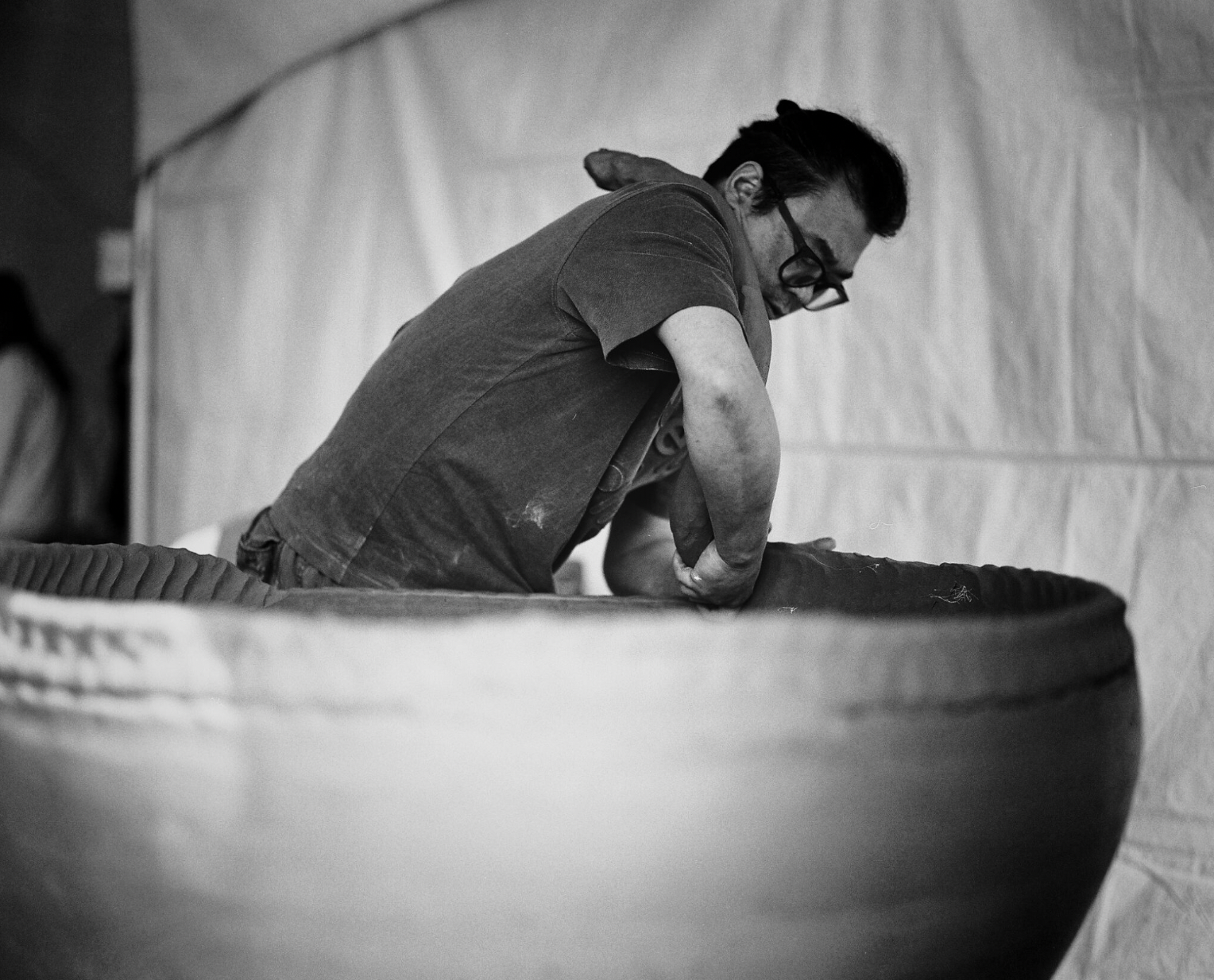
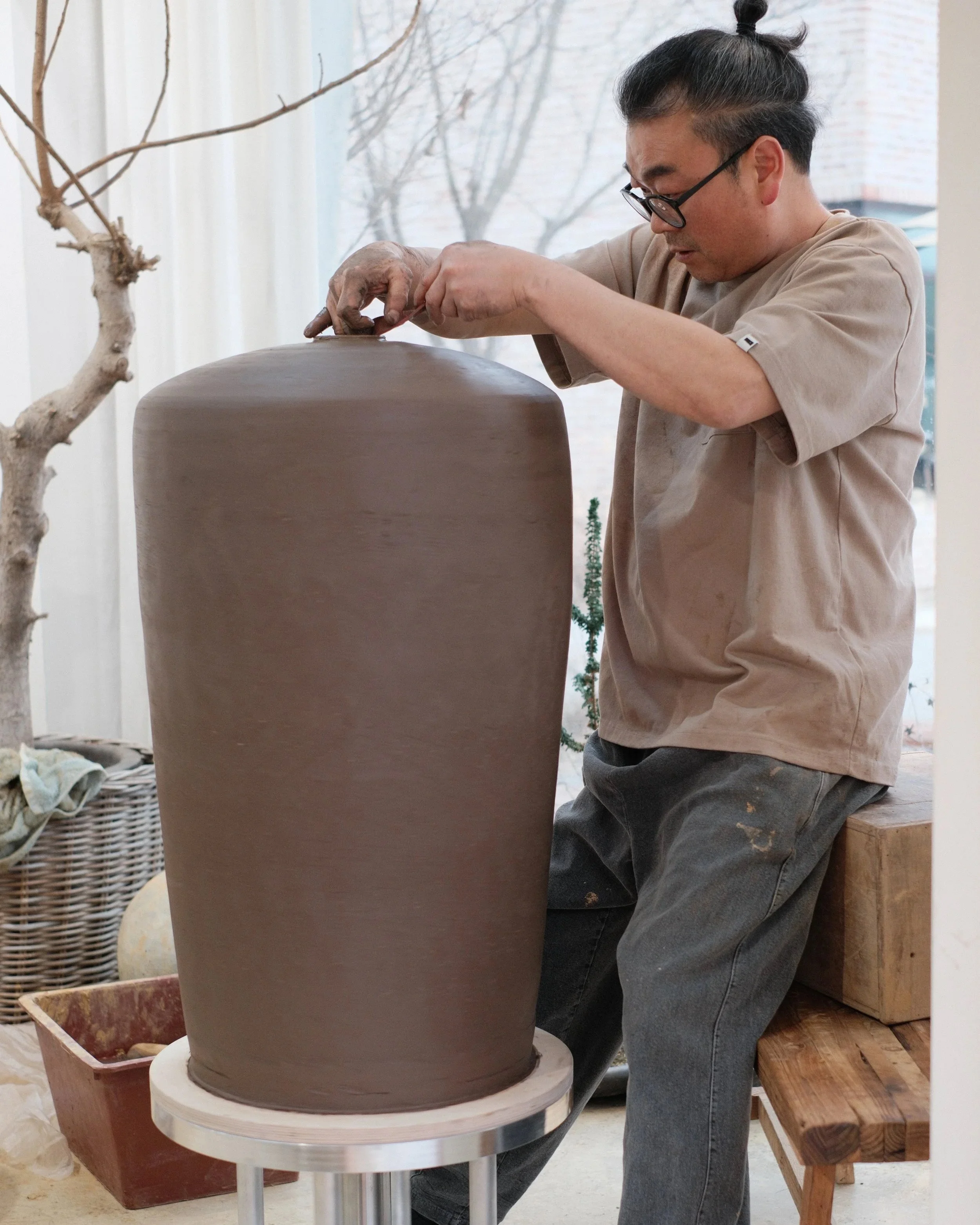
Coiling process (Taryeom-jil), simultaneously attaching the coil and creating height in the wall of the piece in a rhythmic set of micro techniques that become one collective movement
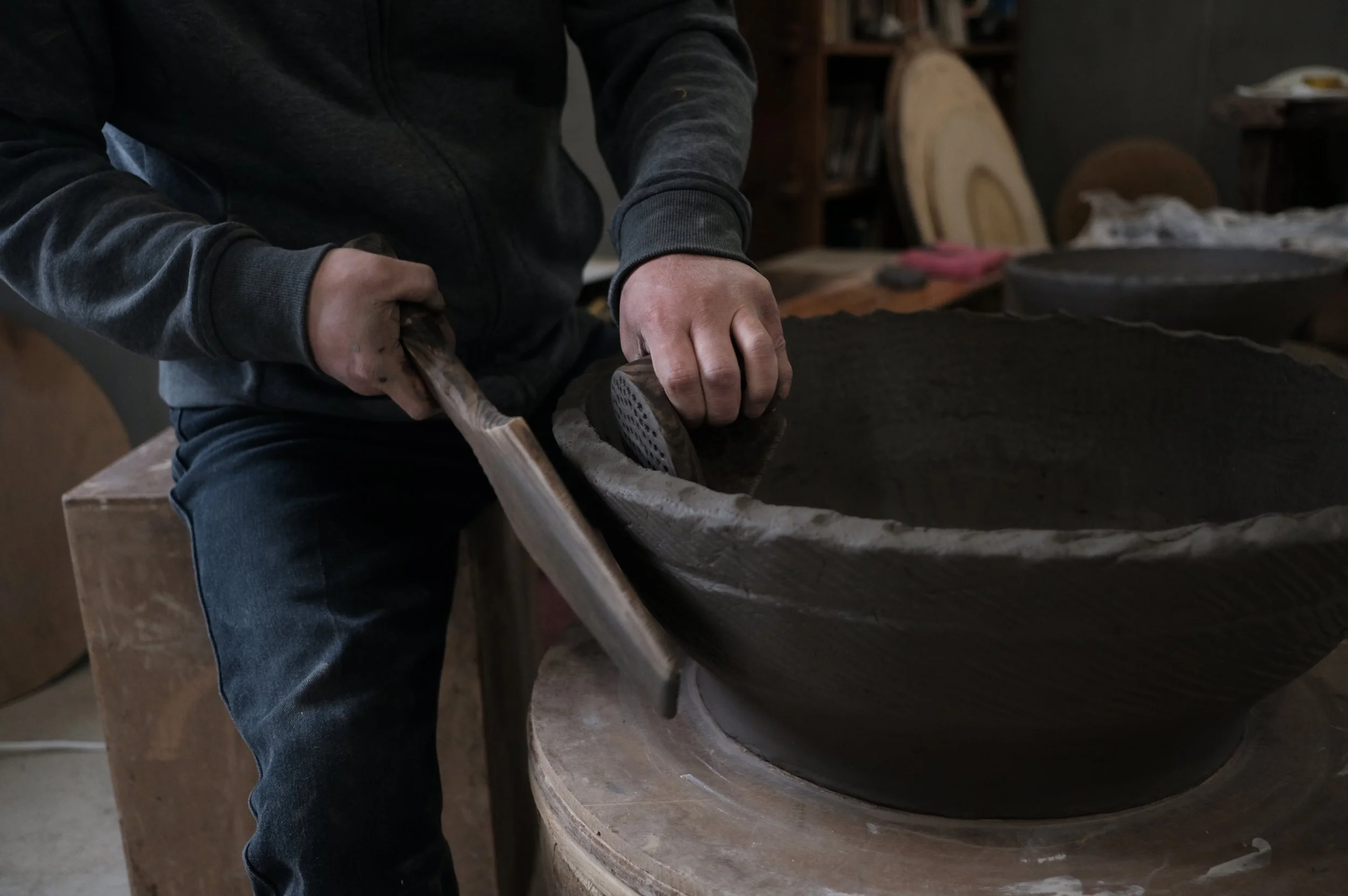
Paddling the form (Surae-jil) using wooden tools inside and outside to compress, thin, and shape the form on the wheel
Final Shaping (Geun-gae-jil) using metal rib tools for smoothing the surface while altering the line of the final form.
Rim forming and refining using a traditional long shammy cloth (Jeon-tae)
Scribing of lines and decorative motifs, historical significance and their role in accentuating form
Lifting the freshly made onggi off the wheel with traditional cloth method
Teacher Kwak’s interpretation of traditional onggi techniques in his artistic practice, along with an invitation to using traditional tools and techniques to inspire new ways of thinking and working
Onggi Tool Kit
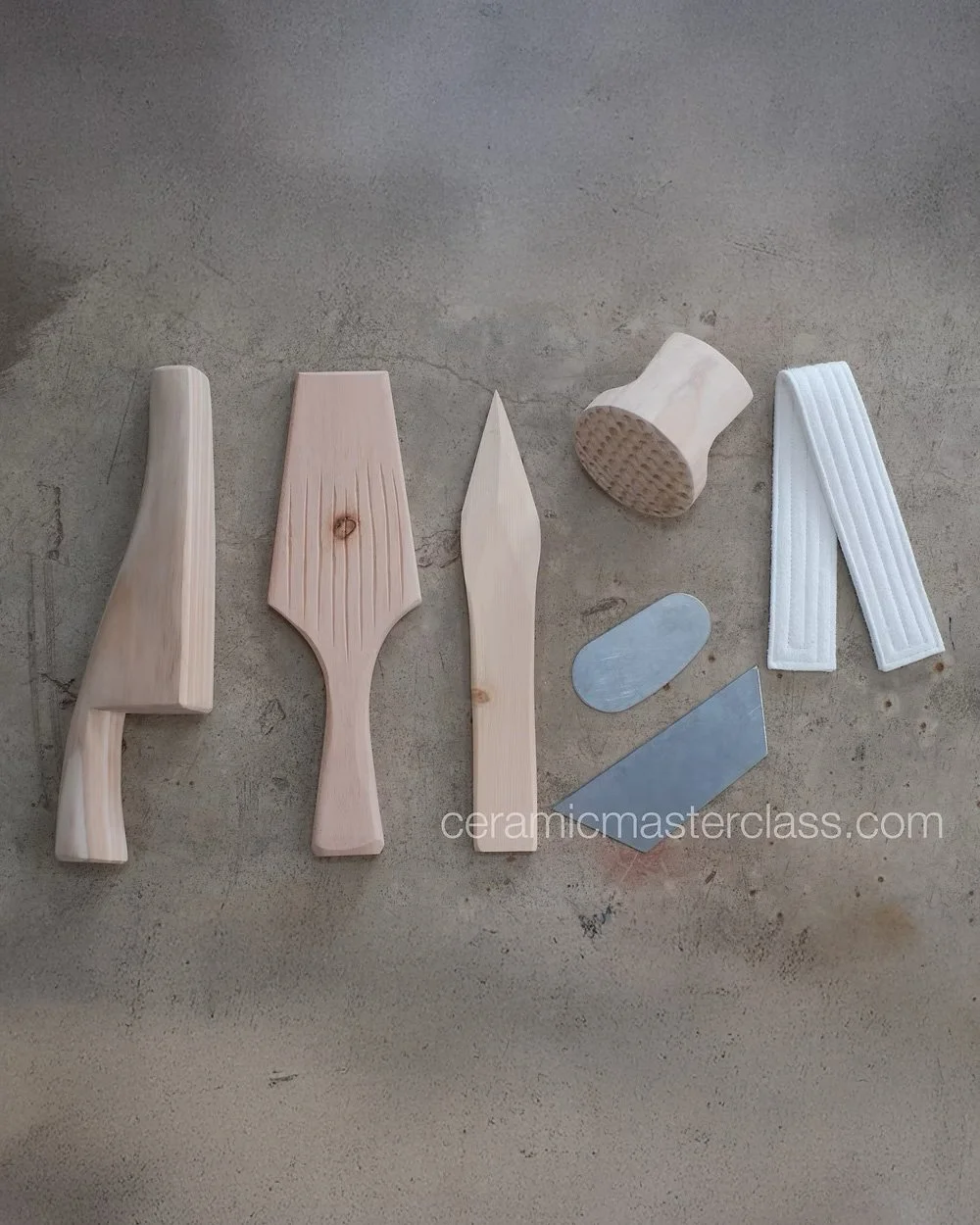
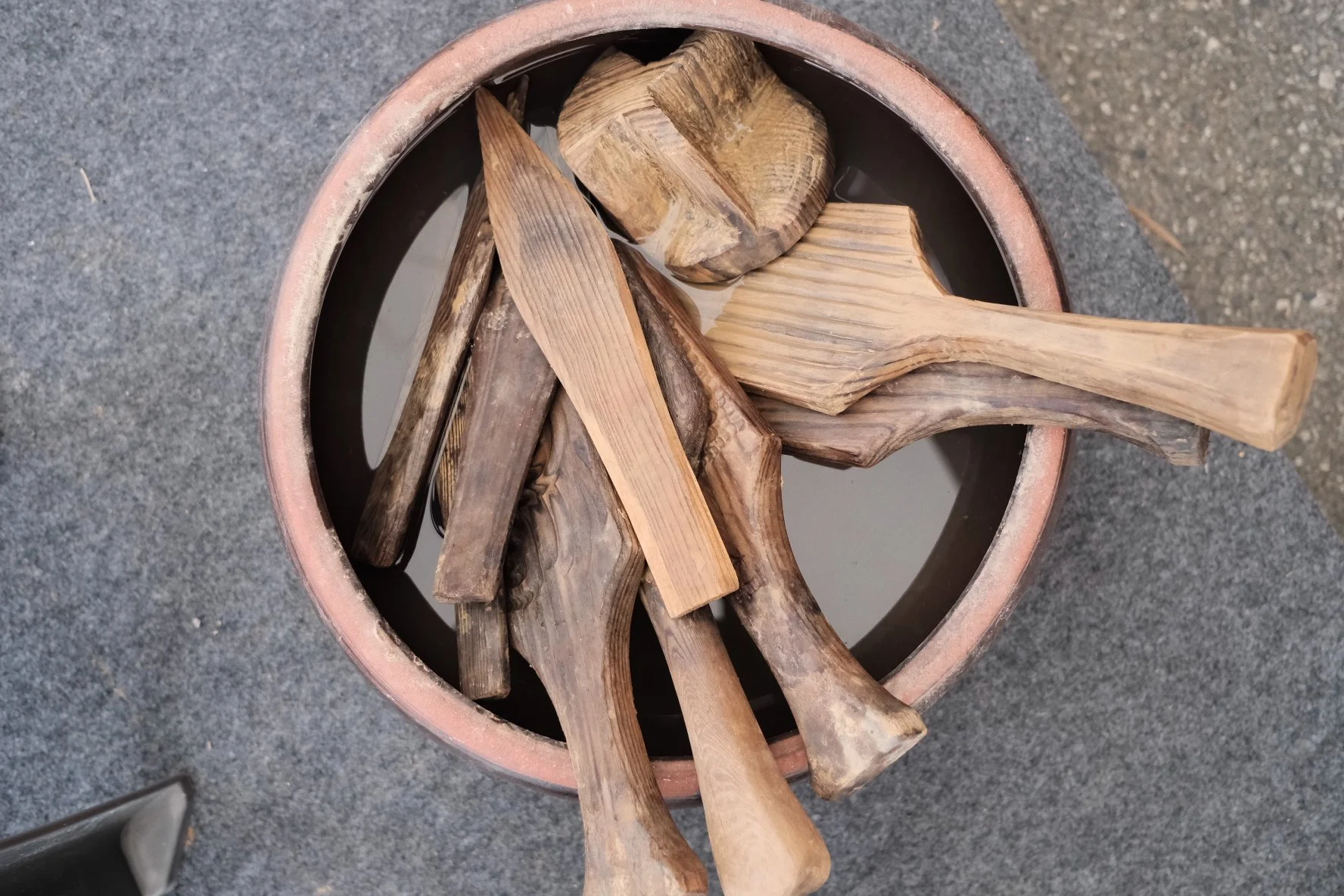
A comprehensive Onggi tool set valued at $300 is included for each student, including 4 wooden tools, 2 metal ribs, and 1 shammy tool. Onggi Tools (pictured from left to right): Bang-mang-i (방망이) - wooden club | Su-rae (수레) - flat paddle | Mit-ka-sae (밑가세) - wooden knife | Do-ge (도게) - striking pad | Geun-gae (근게) - 2 metal ribs | Jeon-dae (전대) - shammy cloth
Key information
-
DATE
Wednesday 2nd - Sunday 6th September 2026
-
DURATION
5 day workshop
-
CLASS SIZE
Maximum 15 students
-
LEVEL
Some knowledge of ceramics would be helpful
-
CLAY TYPE
High quality stoneware clay
-

COST
£2,300 (flexible price plans available)

ARTIST STATEMENTKwak Kyungtae
A fascination with large Onggi vessels and the rough simplicity of Korean slipware led Kwak Kyungtae to develop his own voice in clay. He works exclusively in Onggi and Buncheong, taking his inspiration from the traditions of the Korean peninsula of his birth, particularly during the Joseon dynasty, and applying them in a modern context. His work is resonant of nature’s forms and structures through wheel-thrown and altered work, often including spontaneous marks and gestural brushwork on large pots. His works evoke a balance of the crude and the sublime power of nature’s imperfection, in large and small scale work. The austerity of his style is born from an honest, tacit relationship with clay developed and mastered over a lifetime. He has held solo and group exhibitions throughout East Asia and Europe. His pieces are sold in galleries and shops in Europe, Asia, and the USA.
WHAT YOU CAN EXPECTThe Schedule
-
Welcome Breakfast (from 9am - 10am). The session will start at 10am and will finish at 5:30pm.
-
On the second day the session will start at 10am and will finish at 5:30pm.
-
On the third day the session will start at 10am and will finish at 5:30pm.
-
On the fourth day the session will start at 10am and will finish at 5:30pm.
-
On the final day the session will start at 10am and will finish at 5:30pm.
-
A two course lunch is provided everyday. Please inform us of any special dietary requirements at the time of booking.

A delicious home cooked two-course lunch will be provided every day
As well as refreshments throughout the day.
Discover other workshops with Kwak
-
![]()
Onggi Demo
31st August
Delve into the 7000 year old traditional ceramic craft of Onggi through this intensive one-day demo. -
![]()
Wheel Throwing Masterclass
26th - 30th August
During this intensive five-day masterclass, Teacher Kwak Kyungtae will share and teach the traditional techniques of Korean wheel throwing in a focused and engaging format.
Frequently Asked Questions
-
The Ceramic Studio is located on a beautiful orchard in Brenchley, and there are lots of lovely surrounding towns and villages offering numerous places to stay.
We are happy to arrange transits to and from local accommodation to the studio for the duration of your course. There may be a small fee for this depending on where you are staying. If you know you will require transits please contact us to enquire before booking your accommodation. Please email the office team at info@theceramicstudio.co.uk.
To see examples of local accommodation, click here.
-
Teacher Kwak Kyung-Tae is accompanied by two other tutors on this workshop, Tomi and Maisie. Every student will receive plenty of attention and one-to-one tutoring throughout the course
-
Our standard firing charges are outlined below, however, please bear in mind that for this workshop students are likely to be making large pieces over 30cm in height and width. Onggi pieces are likely to be heavy in weight and students must pay for firing charges on top of the course fee.
Firing charges are as follows:
£5 per 500g for glazed work
£6 per 500g for glazed work with oxide
£10 per 500g for any glazed work over 30cm in height or width
£2 per 500g for work that is bisque fired but not glazed
· Please also note that The Ceramic Studio does not offer a glazing service.
-
Yes! During this Guest Potter Workshop, you’ll be treated to a Welcome Breakfast on the first day, plus morning and afternoon refreshments daily, including teas, coffees, sweet treats, and fresh fruit. A freshly cooked two-course lunch, prepared here in the studio, is also provided every day, with dietary requirements confirmed in advance.
-
If we haven’t quite answered your question please email us info@theceramicstudio.co.uk